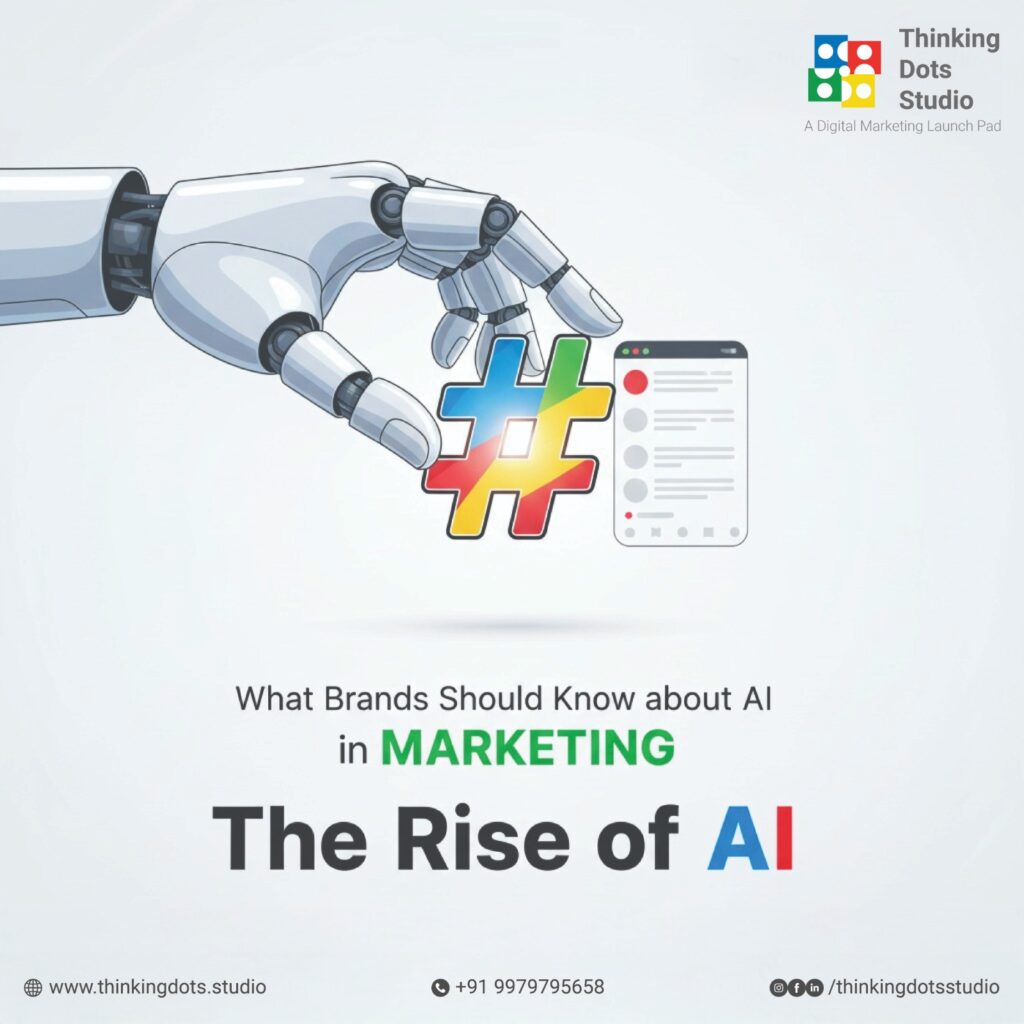
 Artificial Intelligence (AI) is no longer just a futuristic concept-it’s rapidly reshaping how businesses market themselves online. In the world of social media, where speed, personalization, and engagement matter most, AI has emerged as a game-changer. From content creation and customer service to analytics and ad targeting, AI is helping brands streamline processes, improve efficiency, and build deeper connections with their audiences.
But as with any new technology, AI in social media marketing comes with both opportunities and challenges. For brands to fully leverage their potential, it’s important to understand how AI works in this space, the tools available, and the best practices to use it responsibly.
In this blog, we’ll explore the rise of AI in social media marketing and what brands should know to stay ahead of the curve.
Why AI Is Transforming Social Media Marketing
- Data-Driven Insights
Social media platforms generate massive amounts of data every second-likes, comments, shares, watch time, and more. AI helps marketers make sense of this data by identifying patterns, predicting trends, and providing actionable insights. - Personalized Experiences
Consumers expect personalization. AI allows brands to deliver tailored recommendations, targeted ads, and curated content based on user behavior, leading to higher engagement and conversion rates. - Speed and Efficiency
Manual social media management can be time-consuming. AI automates repetitive tasks like scheduling posts, responding to FAQs, or generating captions, freeing up time for marketers to focus on strategy and creativity. - Content Optimization
AI tools can analyze which types of content resonate best with audiences and suggest improvements for future campaigns. This ensures every post has the highest chance of success.
Key Applications of AI in Social Media Marketing
1. Content Creation and Curation
AI tools like ChatGPT, Jasper, and Copy.ai help marketers craft engaging captions, blog posts, and ad copy in seconds. Visual AI tools such as Canva’s AI features or MidJourney can generate design elements, graphics, and even short videos.
For brands, this means quicker content production without sacrificing creativity. However, it’s best to combine AI-generated content with a human touch for authenticity.
2. Chatbots and Customer Support
AI-powered chatbots are increasingly common on platforms like Facebook Messenger, Instagram, and WhatsApp. They can answer FAQs, process orders, and provide personalized recommendations 24/7.
Benefits include:
- Faster response times
- Reduced customer support costs
- Improved customer satisfaction
Example: Many e-commerce brands now use AI chatbots to recommend products based on customer queries, offering a more personalized shopping experience.
3. Social Listening and Sentiment Analysis
AI enables brands to monitor online conversations about their products, competitors, or industry. Sentiment analysis tools detect whether mentions are positive, negative, or neutral, helping brands respond appropriately.
Use case: A company launching a new product can track real-time reactions on Twitter/X, TikTok, or Instagram to quickly address concerns and amplify positive feedback.
4. Ad Targeting and Optimization
AI algorithms power much of the ad targeting on platforms like Facebook, LinkedIn, and Google. They analyze user behavior to show ads to the right audience at the right time.
Additionally, AI can run A/B tests automatically, adjusting ad spend toward the most effective campaigns and optimizing performance without human intervention.
5. Predictive Analytics
Predictive AI models can forecast future trends based on historical data. For example, they can help identify the best posting times, anticipate trending hashtags, or estimate campaign ROI.
This allows marketers to stay proactive rather than reactive.
6. Influencer Marketing
AI tools can analyze influencers’ engagement rates, audience demographics, and authenticity to help brands select the right partners. This reduces the risk of collaborating with influencers who have fake followers or low relevance.
Benefits of AI in Social Media Marketing
- Enhanced Efficiency – Automates repetitive tasks, saving time and resources.
- Deeper Insights-Helps marketers make informed decisions using data analysis.
- Better Engagement-Personalizes interactions, boosting customer loyalty.
- Scalability makes it easier to handle large campaigns across multiple platforms.
- Improved ROI – Optimizes ads and campaigns for maximum return.
Challenges and Risks Brands Should Know
While AI offers immense potential, it’s not without risks. Brands must be aware of the following challenges:
- Over-Reliance on Automation
Relying too heavily on AI-generated content can make brand messaging feel robotic or impersonal. Authenticity remains critical in social media marketing. - Bias in Algorithms
AI systems learn from existing data, which can sometimes reflect societal biases. This could lead to skewed targeting or unfair ad distribution if not monitored carefully. - Data Privacy Concerns
AI tools depend on user data, raising privacy issues. Brands must ensure compliance with data protection regulations like GDPR or CCPA. - Cost of Implementation
Advanced AI tools can be expensive. Small businesses must weigh the costs against potential ROI. - Constant Evolution
AI technologies and social media platforms evolve rapidly. Marketers must continuously learn and adapt to stay relevant.
Best Practices for Brands Using AI in Social Media
- Blend AI with Human Creativity
Use AI for efficiency and insights, but always add a human touch to ensure your content feels authentic. - Stay Transparent
If you’re using AI chatbots or AI-generated content, be clear with your audience. Transparency builds trust. - Prioritize Data Ethics
Respect user privacy and ensure compliance with regulations. Collect only the data you need. - Test and optimize continuously.
AI tools are most effective when fine-tuned regularly. Monitor performance metrics and adjust strategies accordingly. - Invest in Training
Equip your marketing team with the skills to use AI tools effectively and responsibly.
Real-World Examples of AI in Social Media
- Coca-Cola: Used AI to create personalized ads and track sentiment during major campaigns.
- Sephora: Employs AI chatbots on Messenger to provide beauty product recommendations.
- Netflix: Leverages AI-driven insights to recommend trailers and content snippets on social media, boosting engagement.
- Spotify: Uses AI to generate personalized playlists and social campaigns like “Spotify Wrapped,” which go viral each year.
The Future of AI in Social Media Marketing
Looking ahead, AI is set to become even more sophisticated. Emerging trends include:
- AI-powered video editing tools for creating personalized short-form videos.
- Voice and conversational AI for audio-based social platforms.
- Hyper-personalization, where every user gets a unique experience tailored to their preferences.
- Augmented reality (AR) campaigns integrated with AI for immersive customer experiences.
Brands that adapt early will gain a competitive edge, while those that resist may struggle to keep up with evolving customer expectations.
Conclusion
The rise of AI in social media marketing represents one of the most significant shifts in the digital landscape. It offers brands powerful tools to connect with audiences, personalize experiences, and optimize campaigns like never before. But it’s not a magic solution-AI works best when paired with human creativity, ethical practices, and strategic thinking.
For brands, the key lies in embracing AI as a partner rather than a replacement. By balancing innovation with authenticity, businesses can harness AI to grow their presence, build trust, and achieve lasting success in the dynamic world of social media.