
Introduction
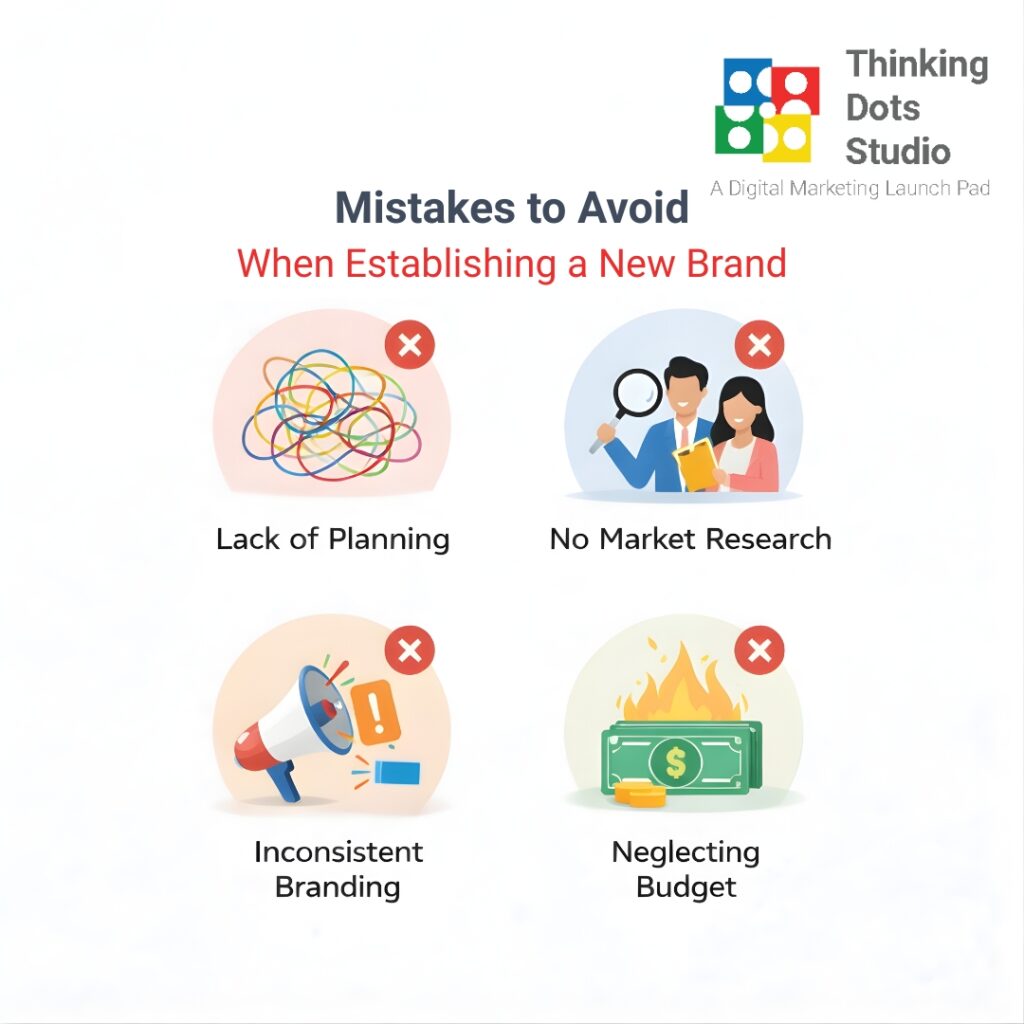
Building a brand from scratch is an exciting journey, but it’s also full of challenges. Many new businesses make common mistakes that can slow growth, confuse customers, or even damage their reputation. Establishing a strong brand requires more than a great logo or catchy name-it requires strategy, consistency, and clarity. In this blog, we’ll explore the most common mistakes to avoid when establishing a new brand, so you can set a strong foundation for long-term success.1. Not Defining Your Brand Purpose
A brand without a clear purpose can feel directionless. Ask yourself:- Why does my brand exist?
- What problems does it solve?
- What values guide my business?
2. Ignoring Your Target Audience
Many new brands make the mistake of trying to appeal to everyone. This approach usually backfires. Understanding your audience is crucial:- Who are they?
- What are their needs and preferences?
- How do they communicate?
3. Inconsistent Visual Identity
Your logo, colors, fonts, and imagery should be consistent across all platforms. Inconsistency can confuse customers and reduce recognition. Common mistakes:- Using multiple fonts or colors randomly
- Inconsistent logo placement or variations
- Different styles on the website, social media, and packaging
4. Overlooking Brand Voice
Your brand voice reflects your personality and tone in all communications. A confusing or inconsistent voice can make your brand feel unreliable. Tip: Define your tone-whether it’s professional, friendly, playful, or authoritative- and apply it consistently across all channels.5. Neglecting Competitor Analysis
Failing to research competitors can result in copying ideas or missing opportunities to stand out. Understanding what works in your industry helps you differentiate your brand. Tip: Identify gaps in the market and develop a unique value proposition.6. Rushing the Branding Process
Branding takes time. Some businesses rush the process, launching with an incomplete strategy or unpolished design. This can confuse customers or make the brand seem unprofessional. Tip: Take the time to plan, test, and refine your branding before going public.7. Not Planning for Scalability
A brand should grow with your business. Mistakes include:- Choosing trendy design elements that may quickly become outdated
- Using messaging that won’t scale as product lines expand
- Ignoring long-term marketing strategies