
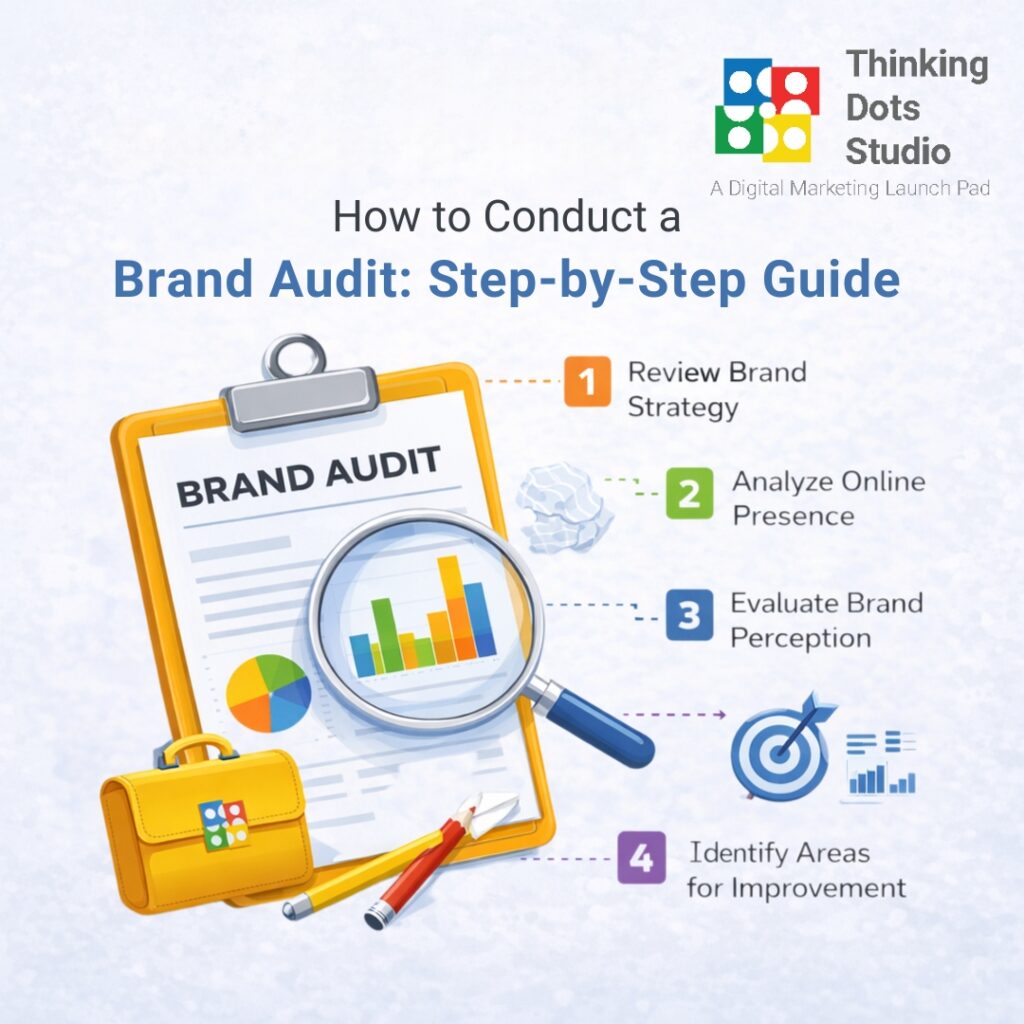
Introduction
A brand audit is a critical process that helps businesses understand how their brand is perceived, identify areas for improvement, and ensure consistency across all touchpoints. Whether you’re a startup, an established company, or planning a rebrand, a brand audit provides valuable insights that drive growth and strengthen your identity. In this blog, we’ll provide a step-by-step guide on how to conduct a brand audit so you can evaluate your brand effectively.Step 1: Define the Purpose of the Audit
Before starting, clarify why you’re conducting a brand audit. Common reasons include:- Understanding brand perception
- Identifying inconsistencies
- Preparing for a rebrand
- Measuring the effectiveness of marketing efforts
Step 2: Collect Internal Insights
Start by gathering information from within your organization:- Brand Mission and Vision: Are they clear and aligned with current goals?
- Core Values: Do employees understand and reflect them in their work?
- Internal Messaging: Are marketing materials and communications consistent?
- Logo: Is it modern, versatile, and recognizable?
- Color Palette & Typography: Are they consistent across all platforms?
- Brand Voice & Messaging: Is your tone clear and consistent in marketing materials?
- Imagery & Design Style: Do visuals reflect your brand personality?
Step 4: Evaluate Your Online Presence
Your digital footprint is a critical part of your brand audit. Examine:- Website: Is it up-to-date, easy to navigate, and aligned with your brand identity?
- Social Media Profiles: Are visuals, tone, and messaging consistent across platforms?
- Online Reviews & Mentions: How is your brand perceived by customers?
- SEO & Content Strategy: Does your content align with your brand values and audience needs?
Step 5: Assess Competitor Positioning
Understanding how competitors present themselves helps identify opportunities and gaps:- Analyze competitors’ logos, websites, and marketing campaigns.
- Compare messaging, tone, and audience engagement.
- Identify differentiators that your brand can emphasize.
Step 6: Gather Customer Feedback
Your audience’s perception is the most valuable insight:- Conduct surveys, polls, or interviews with customers.
- Analyze customer reviews, testimonials, and social media comments.
- Identify common themes, satisfaction levels, and areas of improvement.
Step 7: Identify Gaps and Opportunities
After collecting all data, evaluate:- Consistency Issues: Are there conflicting messages or visuals across touchpoints?
- Brand Perception Gaps: Does your audience see your brand differently than you intend?
- Growth Opportunities: Are there areas to innovate or differentiate from competitors?
Step 8: Create an Action Plan
A brand audit is only valuable if it leads to action:- Develop a clear roadmap to address inconsistencies.
- Update brand guidelines if needed.
- Plan new campaigns, redesigns, or messaging adjustments.
- Set metrics to measure progress and impact over time.